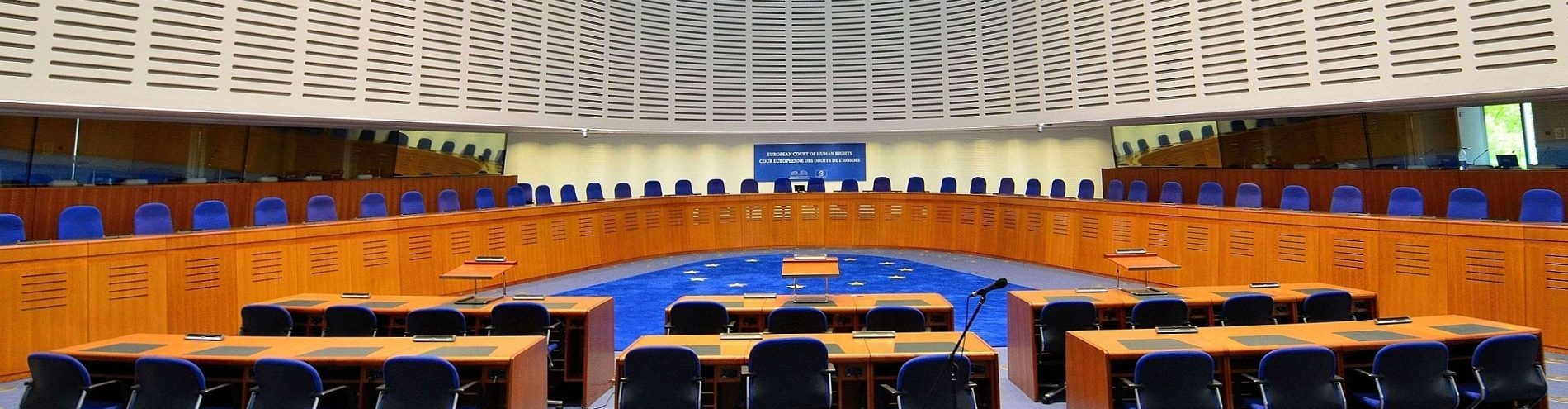
In the case of Jesus Pinhal v. Portugal (48047/15 and 2276/20, 9.7.2026), a Grand Chamber of the European Court of Human Rights seized the opportunity to revisit and refine the framework established in A and B v. Norway for assessing the compatibility of parallel criminal and administrative proceedings with the ne bis in idem principle enshrined in Article 4 of Protocol No. 7 to the Convention.
The applicant, a former vice-chairman of Banco Comercial Português (BCP), was prosecuted in Portugal in three parallel sets of proceedings arising from the same banking and accounting scandal. Criminal proceedings, proceedings before the Portuguese central bank (Banco de Portugal), and proceedings before the Securities Market Commission (CMVM) each concerned different aspects of his alleged conduct in concealing the bank’s true financial situation and disseminating false information to regulators and the financial market. The applicant argued that being subjected to these three sets of proceedings violated the non bis in idem guarantee under Article 4 of Protocol No. 7 to the Convention.
The ECtHR’s ruling
While reaffirming the basic architecture of A and B, the ECtHR introduced several important modifications of the methodology and criteria to be applied in respect of dual proceedings (§ 216).
A narrower definition of the idem condition.
The ECtHR departed from the Sergey Zolotukhin/A and B formula that the facts need only be “the same or substantially the same”. It held that the idem requirement is now satisfied only where the material facts constituting the material element of the first offence are identical to those underlying the subsequent proceedings. Mere factual similarity is no longer sufficient (§ 223). In doing so, the ECtHR largely aligned its interpretation of idem with that adopted by the CJEU (§ 226).
A reformulation of the criteria governing the “sufficiently close connection” between parallel proceedings.
The ECtHR reaffirmed the central holding of A and B that Article 4 of Protocol No. 7 is not violated where parallel proceedings form part of a single integrated enforcement system – a “coherent whole“. It nevertheless refined several of the criteria used to assess that connection:
- the complementarity of the purposes pursued by the proceedings, emphasized in A and B, is replaced by complementarity of the protected legal interests or social values (§ 230);
- the requirement that duplication in the gathering and assessment of evidence be avoided is formulated more flexibly, focusing on adequate interaction and coordination between the competent authorities (§ 233);
- greater emphasis is placed on the existence of clear and effective coordination mechanisms capable of safeguarding defence rights throughout the parallel proceedings (§ 232).
A strengthening of the proportionality requirement.
Whereas A and B treated the proportionality of the overall sanctions as one of several indicators of a sufficiently close connection, Jesus Pinhal elevates this requirement. The ECtHR held that States must ensure, through clear, effective and consistent procedural rules, that the cumulative sanctions imposed across the different proceedings remain proportionate to the seriousness of the offending conduct (§ 235).
Applying these revised criteria to the facts of the case, the ECtHR concluded that the criminal proceedings and the two administrative proceedings had formed a coherent enforcement system. Although they arose from related conduct, they addressed distinct offences protecting different legal interests, were sufficiently coordinated in substance and in time, and resulted in an overall sanction that was not disproportionate. Accordingly, the ECtHR found no violation of Article 4 of Protocol No. 7.
Observations
The Grand Chamber judgment in Jesus Pinhal v. Portugal constitutes the most important development in the ECtHR’s ne bis in idem jurisprudence since A and B v. Norway. Just as A and B fundamentally recalibrated the ECtHR’s understanding of Article 4 of Protocol No. 7 after Sergey Zolotukhin v. Russia, Jesus Pinhal revisits that framework in light of nearly a decade of practical experience. It thereby does not abandon the integrated-proceedings doctrine developed in A and B. Rather, it seeks to refine it by introducing more precise criteria, as described above.
The ECtHR openly acknowledges that the application of the A and B criteria had generated considerable uncertainty for domestic courts and had become increasingly difficult in complex regulatory environments characterised by parallel administrative and criminal enforcement. In this connection, it also expressly notes the numerous preliminary references submitted to the CJEU concerning the same issues (§ 214).
Growing convergence with Luxembourg
The judgment seems to demonstrate the ECtHR’s intention to bring its jurisprudence closer to that of the CJEU (§§ 218, 226). Indeed, the Grand Chamber devotes an extensive part of its reasoning to analysing the Luxembourg case-law before reformulating its own approach (§§ 130-137).
The alignment is particularly striking regarding the concept of idem, where the ECtHR now essentially adopts the approach developed by the CJEU.
Both European courts currently assess dual proceedings through essentially the same overall lens: whether they form a “coherent whole” (see e.g. bpost, § 49). Likewise, the principal indicators have become largely similar: identity of the offender, identity of the relevant facts, a sufficiently close connection in substance and in time, foreseeability, coordination preventing unnecessary duplication of evidence, and an overall sanction that remains proportionate (§ 237).
Interestingly, the CJEU itself emphasised already in Menci (§ 62) that Article 50 of the Charter guarantees a level of protection that does not conflict with Article 4 of Protocol No. 7.
New divergences
Paradoxically, however, Jesus Pinhal simultaneously introduces new differences between Strasbourg and Luxembourg.
The most fundamental methodological divergence remains untouched. The CJEU accepts that the ne bis in idem principle can be made the subject of limitations justified under Article 52(1) of the EU-Charter. By contrast, Article 4 of Protocol No. 7 contains no limitation clause. The Strasbourg Court therefore continues to rely on the legal fiction developed in A and B: where proceedings are sufficiently closely connected in substance and time, they are treated not as separate proceedings but as components of one integrated system. The conceptual foundations therefore remain fundamentally different, notwithstanding the growing similarity of the practical criteria.
More surprisingly, Jesus Pinhal creates fresh substantive divergences.
First, the ECtHR now attaches importance to whether the parallel proceedings protect complementary legal interests or social values. This contrasts with the CJEU’s settled case-law, according to which the legal classification of offences under national law and the protected legal interests are not decisive. Otherwise, the level of protection afforded by Article 50 of the Charter would vary from one Member State to another (see Menci, § 36; bpost, § 34; MSIG, § 40).
Secondly, the proportionality test now appears somewhat different. Strasbourg requires an overall sanction that is proportionate and coordinated through effective procedural safeguards. Luxembourg applies the stricter standard developed in Menci and reaffirmed in bpost, namely that the cumulative penalties must not exceed what is strictly necessary in relation to the seriousness of the offence.
These divergences are all the more striking since the ECtHR itself analyses the relevant CJEU judgments in considerable detail before formulating its revised approach.
Clarification at one level, greater complexity at another
Whether Jesus Pinhal ultimately simplifies the law therefore depends on the perspective adopted.
From a purely Strasbourg perspective, the answer is probably yes. The judgment clarifies several ambiguities left by A and B, especially concerning the notion of idem and the criteria governing integrated proceedings.
From the broader European perspective, however, the answer is considerably less optimistic.
The coexistence of two systems based on increasingly similar – but not identical – criteria is likely to continue generating uncertainty for national courts. The alignment regarding idem undoubtedly removes one important source of complexity. Yet this benefit is offset by the emergence of new discrepancies concerning protected legal interests and the applicable proportionality standard.
Ironically, the ECtHR’s attempt to clarify the law therefore produces a new layer of complexity. It is as if every effort in Strasbourg and Luxembourg to clarify the relationship between criminal and administrative enforcement generates fresh questions (see bpost, BV, MV – 98, Engie România SA).
What should national courts do?
Jesus Pinhal ultimately leaves national judges with a particularly difficult task.
Under Article 52(3) of the EU-Charter, Charter rights corresponding to Convention rights must be interpreted consistently with the Convention, while Union law remains free to provide more extensive protection. In principle, domestic courts should therefore apply whichever European standard affords the higher level of protection.
Jesus Pinhal demonstrates, however, that identifying that higher standard is no straightforward exercise. Is Strasbourg more protective by insisting on “clear, consistent and effective rules” and respect for the rights of the defence? Does Luxembourg provide greater protection by insisting that cumulative penalties be strictly necessary? Does Strasbourg’s emphasis on complementary legal interests expand or restrict the possibility of parallel proceedings compared with the CJEU’s more autonomous concept of idem?
The judgment offers no clear answer. Rather than resolving the relationship between the Convention and the EU-Charter in this area, Jesus Pinhal confirms that the ne bis in idem principle remains one of the most intricate fields of European fundamental rights law. The Grand Chamber undoubtedly reduces some of the uncertainty inherited from A and B. Yet it leaves unresolved the more fundamental complexity arising from the coexistence of two European Courts whose jurisprudence is perhaps increasingly convergent in ambition but still only partially harmonised in substance.