Author Archives: johan-callewaert

AG 505 zum Europäischen Gerichtshof für Menschenrechte: Sitzung vom 29. Januar 2026

Liebe Studierende,

drei Rechtssachen gegen Deutschland stehen auf der Tagesordnung unserer nächsten une letzten Sitzung. Sie betreffen folgende Themen:

  1. Folterandrohung als Mittel zur Rettung eines Menschenlebens? (Rs. Gäfgen / Deutschland)
  2. Auslandseinsätze der Bundeswehr (Rs. Hanan u. a. / Deutschland)
  3. Grenzen der Berichterstattung über Polizeieinsätze (Rs. Bild GmbH & Co. KG / Deutschland)

Die betreffenden Urteile sind diesem Beitrag als Anlage beigefügt.

Es erwarten uns interessante Diskussionen!

Prof. Dr. Johan Callewaert

AG 505 zum Europäischen Gerichtshof für Menschenrechte: Sitzung vom 22. Januar 2026

Liebe Studierende,

unsere kommende Sitzung steht ganz im Zeichen des Schutzes von verletzlichen Jugendlichen durch den EGMR.

Beim ersten Fall, Khan / Frankreich, geht es um einen 11-jährigen unbegleiteten Asylbewerber im “Dschungel von Calais”.

Der zweite Fall, V.C.L. und A.N. / Vereinigtes Königreich, betrifft zwei jugendliche Opfer von Kinderhandel.

Die betreffenden Urteile sind diesem Beitrag als Anlage beigefügt.

Ich freue mich auf einen interessanten Austausch mit Ihnen.

Prof. Dr. Johan Callewaert

AG 505 zum Europäischen Gerichtshof für Menschenrechte: Sitzung vom 15. Januar 2026

Liebe Studierende,

auf der Tagesordnung unserer kommenden Sitzung stehen folgende aktuelle Themen:

  1. Ein Recht auf Vergessenwerden? (Rs. M.L. und W.W. / Deutschland)
  2. Auslandseinsätze der Bundeswehr (Rs. Hanan / Deutschland)

Die betreffenden Urteile sind diesem Beitrag als Anlage beigefügt.

Ich freue mich auf spannende Beiträge und anregende Diskussionen.

Prof. Dr. Johan Callewaert

AG 505 zum Europäischen Gerichtshof für Menschenrechte: Sitzung vom 8. Januar 2026

Liebe Studierende,

auf der Tagesordnung unserer kommenden Sitzung stehen folgende Themen:

  1. Schutz gegen häusliche Gewalt (Rs. Talpis / Italien)
  2. Schutz gegen moderne Sklaverei: Erntehelfer in Griechenland (Rs. Chowdury u.a. / Griechenland)

Die betreffenden Urteile sind diesem Beitrag als Anlage beigefügt.

Ich freue mich auf spannende Beiträge und anregende Diskussionen.

Prof. Dr. Johan Callewaert

Trends 2021-26: An updated and enriched version of the paper taking stock of the interplay between the European Convention on Human Rights and EU Law

An new version of the “Trends”-paper is now available. It is an updated and enriched version of its predecessors, reflecting the latest case-law developments discussed on this blog, including some new topics such as climate change, sports arbitration or hybrid entities.

The European Commission requests an opinion by the CJEU on the revised Draft Agreement on the Accession of the EU to the European Convention on Human Rights

On 21 November 2025 the European Commission filed a request with the CJEU for an Opinion (1/25) under Article 218(11) TFEU on the revised Draft Agreement on the Accession of the EU to the European Convention on Human Rights.

This request comes after the CJEU’s ruling in KS and KD v. Council and Others (Joined Cases C‑29/22 P and C‑44/22 P) which, it is assumed, could render the outstanding revision of the Draft Agreement in the area of the Common Foreign and Security Policy (CFSP) unnecessary.

From Full Coverage to Patchwork Coverage: The Convention in the Age of Hybrid EU Actors – Judgment of the CJEU in WS and Others v. Frontex

The ruling by the CJEU in WS and Others v. Frontex (C-679/23 P, 18.12.2025), given on an appeal against a judgment by the General Court (T-600/21), represents a clarification of the fundamental rights obligations of the European Border and Coast Guard Agency (Frontex), with significant implications for the Convention protection system.

The facts underlying this ruling involve a Syrian Kurdish family consisting of two parents and four children who arrived on the Greek island of Milos in October 2016. Shortly after their arrival, they were transferred to a reception and identification centre, where they expressed their desire to apply for international protection. The family was nonetheless deported to Turkey, via a joint return operation coordinated by Frontex.

The family alleged that this removal occurred without any written or enforceable return decisions being issued by the Greek authorities, which they argued violated the principle of non-refoulement and their fundamental rights.

The family sued Greece before the ECtHR, resulting in a friendly settlement where Greece agreed to pay the family a total of 75,000 euros for damages.

In September 2021, the family brought an action for damages against Frontex in the General Court, seeking approximately 136,000 euros for material and non-material harm.

The current ruling by the CJEU arose from the family’s appeal after the General Court had dismissed their claim, primarily on the grounds that there was no direct causal link between Frontex’s actions and the family’s damages. The CJEU disagreed with these findings and referred the case back to the General Court.

*             *             *

One of the main findings of this ruling on which this post will concentrate is that, contrary to what the General Court had considered, Frontex (European Border and Coast Guard Agency), as an Agency of the EU created in order to improve the integrated management of the external border of the EU (Hamoudi v. Frontex, § 66), cannot escape all extra-contractual liability when it cooperates with Member States to ensure the return of asylum seekers.

In the case at hand, the liability invoked by the appellants mainly concerned a) their inclusion in a return operation from Greece to Turkey without them having been the subject of written return decisions, and b) infringements of their fundamental rights committed during their return flight to Turkey, notably the principle of non-refoulement.

The General Court had denied the existence of a direct causal link between the alleged damage and Frontex’s actions, considering that the latter were of the sole responsibility of Greece. In its opinion, Frontex only had to provide technical and operational support to the Member States (§ 92). It had no obligations in respect of joint return operations organized by the Member States (§ 124).

However, the CJEU is of a different opinion. Referring to Article 51(1) of the EU-Charter and the relevant provisions of Regulation 2016/1624 on the European Border and Coast Guard – now replaced by Regulation 2019/1896 – it comes to the conclusion that “in the light of the specific obligations which Regulation 2016/1624 imposes on Frontex in the context of the coordination of joint return operations, that agency is required to verify that such decisions exist for all persons whom a Member State intends to include in such operations, in order to ensure that they comply with the requirements arising from that regulation and with the fundamental rights of the persons concerned, and in particular the principle of non-refoulement.” (§ 102)

As regards the damage allegedly incurred by the appellants as a result of their forced return to Turkey, the CJEU ruled that while, under Article 42(1) of Regulation 2016/1624, the host Member State is in principle to be held liable for any damage caused by members of the European Border and Coast Guard, Frontex is nonetheless under a set of obligations intended to ensure respect for fundamental rights in the context of joint return operations. It can therefore not be excluded a priori that a breach of those obligations by its departments or staff in the context of a particular operation may have contributed to infringements of fundamental rights taking place during a return flight (§ 132).

*             *             *

From a Convention point of view, this ruling is particularly interesting in that it confirms that the hybrid structure of the European Border and Coast Guard (EBCG), resulting from its institutional and operational association of national and EU components, also produces a hybrid form of non-contractual liability for breach of fundamental rights, with Frontex bearing part of that liability, along with the Member States. As Recital 6 of Regulation 2016/1624 puts it, the European integrated border management is a matter of shared responsibility of Frontex and the national authorities responsible for border management.

In this respect, the EBCG bears some resemblance with the European Public Prosecutor’s Office (EPPO), which is another hybrid EU entity operating on the basis national and EU authorities cooperating on the ground (see An Elephant in the Room: the European Convention on Human Rights and the EPPO).

EBCG and EPPO represent a challenge for the Convention system in that they both rely in part on EU entities and officers which, because the EU is not itself a Contracting Party to the Convention, are not subject to the latter (on this, see Bosphorus v. Ireland, § 152), whereas the national components of EBCG and EPPO are. This results in a legal duality as regards the fundamental rights applicable to the actions which these two bodies undertake. Consequently, potential victims of these actions must base their claims on different sets of fundamental rights. Not only does this represent a heavier burden for these persons, it is also a challenge to legal certainty and legal coherence. The impact of the EPPO hybrid structure on the application of the Convention has been described in detail in No case to answer for the EPPO?.

WS and Others is a perfect illustration of this duality and of the resulting increased complexity. Indeed, before going before the General Court with their claim against Frontex based only on EU law, the appellants had filed an application against Greece with the ECtHR, which gave rise to a friendly settlement, based on the sole Convention (§ 35). In this connection, the CJEU also makes it clear that the non-contractual liability to be assumed by Frontex is under EU law only (§ 127).

From a Convention perspective, these hybrid constructions operating within the territory and jurisdiction of the Member States represent a new situation. It is no longer a Bosphorus-type scenario in which national authorities are the sole bodies responsible for applying EU law and thereby ensuring the full application of the Convention to all actions undertaken by them, even when those actions are based on EU law. Instead, full coverage by the Convention is being replaced by a “patchwork coverage”, with gaps in the Convention’s applicability emerging where actions within the jurisdiction of the Member States are carried out by EU entities or officers acting on behalf of the EU itself and therefore not subject to the Convention. (Bosphorus v. Ireland, §§ 137 and 152).

In the specific context of Europol, which is another hybrid entity, the CJEU even acknowledged a form of joint and several liability between Europol and a Member State, allowing a claim for compensation for a breach of the confidentiality of personal data to be brought in its entirety either before the EU courts or before the national courts, at the claimant’s choice (Kočner v. Europol).

In response to these concerns, one may of course refer to the EU-Charter and its Article 52(3) which is designed to ensure coherence between the EU and Convention protection levels. However, in spite of this Article 52(3), which is meant to guarantee compliance with the Convention as minimum protection level under EU law, this compliance in practice turns out to be purely optional in the case-law of the CJEU, resulting in some significant protection deficits (see A logical response to the optionality of the Convention).

Moreover, this “patchwork coverage” clashes with the principle according to which “Article 1 [of the Convention] … does not exclude any part of a Contracting Party’s ‘jurisdiction’ from scrutiny under the Convention” (Bosphorus v. Ireland, § 153). With hybrid EU entities ensuring part of the law-enforcement in the Member States, part of what is taking place within the “jurisdiction” of the Member States now falls outside the scope of the Convention and is therefore no longer subject to the external scrutiny by the ECtHR.

Yet, this external scrutiny by the ECtHR has always been seen as an essential component of an effective protection of fundamental rights in Europe. This is also why the European legislature in Art. 6(2) TEU enjoined the EU to accede to the Convention. The rise of EU hybrid entities is one more good reason for the EU to go ahead with this accession, as it would put an end to the patchwork coverage by the Convention in this area, by making the EU and its entities subject to the Convention, on an equal footing with the Member States (on the current state of the accession process, see The European Commission requests an opinion by the CJEU). In the meantime, however, the patchwork coverage will continue. It can therefore only be hoped that the optionality of the Convention in EU law will not.

A judicial, comprehensive and flexible Strasbourg response to climate change: judgment of the ECtHR in Greenpeace Nordic and Others v. Norway

In the case of Greenpeace Nordic and Others v. Norway (28.10.2025, 34068/21), the ECtHR handed down its fourth judgment on the duties of the Sates as regards climate change. It provides a good opportunity to compare the Strasbourg approach with the EU approach to climate change as such, as it is set out in Regulation 2021/1119 establishing the framework for achieving climate neutrality (‘European Climate Law’), implementing part of the European Green Deal.

*             *             *

The principal facts of this case were summarized in the ECtHR’s press release as follows (emphasis added):

The applicants are six Norwegian nationals born between 1995 and 2001 who live in Oslo, and two non-governmental organisations, Greenpeace Nordic and Young Friends of the Earth Norway, based in Norway. The individual applicants are all current or former members of Young Friends of the Earth.

On 10 June 2016 the Ministry of Petroleum and Energy awarded ten licences to 13 private companies for petroleum gas production on the Norwegian continental shelf, where Norway’s offshore petroleum activities take place. The two applicant organisations sought a review of the validity of that decision. On 4 January 2018 the Oslo City Court held that the decision had been valid.

On 22 December 2020 the Supreme Court dismissed an appeal by the applicants, holding, by a majority of 11 votes to 4, that the decision granting the licences had been valid and finding that the effects of possible future emissions as a result of the licences awarded did not constitute an “immediate risk” and, consequently, that the issue did not fall within Article 8 of the Convention.

Relying on Articles 2 (right to life) and 8 (right to respect for private and family life), the applicants complained that, before issuing the petroleum production licences, the authorities had not conducted an environmental impact assessment (“an EIA”) of the potential impact of petroleum extraction on Norway’s obligations to mitigate climate change.

*             *             *

Greenpeace Nordic focusses on Article 8 of the Convention and the procedural obligations of the State when granting licences in the context of petroleum exploration and extraction, considered within the State’s broader duty to effectively protect individuals from serious adverse effects of climate change on their life, health, well-being and quality of life (§ 317).

Before addressing these procedural aspects, the ECtHR rejected the victim status of the individual applicants, but not that of the two NGOs, and recalled the following key substantive principles which it identified in its seminal ruling in Verein KlimaSeniorinnen Schweiz and Others v. Switzerland. These principles are:

  • Under Article 8 of the Convention States must ensure effective protection of persons within their jurisdiction from serious harms to life, health, well-being, and quality of life caused by climate change.
  • States have a primary duty to adopt and effectively implement regulations and measures that can mitigate current and potentially irreversible future climate impacts.
  • States retain a wide margin of appreciation in deciding how to fulfil their climate-related obligations.
  • Climate protection should weigh heavily when balancing it against competing interests. (§§ 314-316)

The ECtHR then identified the following procedural requirements applicable in the context of the licencing of dangerous activities having an impact on climate change:

  • Before authorising any potentially dangerous activity, States must conduct an environmental impact assessment (EIA) that is adequate, timely, comprehensive, undertaken in good faith, and based on the best available science.
  • The purpose of the EIA is to safeguard individuals’ right to effective protection from serious climate-related risks to their life, health, well-being, and quality of life.
  • For petroleum production projects, the EIA must at minimum include:
    • A quantification of all anticipated greenhouse gas (GHG) emissions, including combustion emissions both domestically and abroad.
    • An assessment by public authorities of whether the project is compatible with national and international obligations to take effective measures against the adverse effects of climate change.
  • Informed public consultation must occur early, when all options remain open and pollution can still be effectively prevented at the source.

*             *             *

Applying these criteria to the case at hand, the ECtHR noted that Norway’s petroleum activities operated under a three-stage regulatory framework involving a strategic EIA before opening areas to exploration, no formal EIA requirement during the licensing (exploration) stage, and an EIA and public consultation – subject to possible waivers – at the Plan for Development and Operation (PDO) stage prior to extraction, with both later stages subject to judicial review.

The ECtHR found that the assessments leading to the 2016 decision were not fully comprehensive, as key climate-related impacts, including exported combustion emissions, were deferred to later stages or to general climate policy. It noted that several extraction projects had been authorised without assessing combustion emissions, a practice that could undermine the purpose of timely and comprehensive EIAs.

However, the ECtHR gave greater weight to structural developments strengthening compliance: the Norwegian Supreme Court’s recognition of a constitutional duty not to approve PDOs inconsistent with climate considerations, the EFTA Court’s ruling requiring retrospective EIAs to remedy omissions without circumventing the law, and the Government’s assurance that combustion-emission assessments and public consultations would occur before decisions. Finding no structural deficiencies in the system and concluding that deferred EIAs could still satisfy Article 8 requirements, the ECtHR held that there had been no violation of Article 8 and that it was not necessary to examine separately the complaints under Article 2 of the Convention.

*             *             *

At this stage, it is worth asking what the specificity and added value of the Strasbourg approach to climate change is, when compared with the EU approach, as set out in Regulation 2021/1119. To answer this question, one should first briefly recapitulate the main elements of that Regulation.

In essence, Regulation 2021/1119 establishes a framework for achieving climate neutrality within the EU by 2050 and provides for a binding EU target of a net domestic reduction in greenhouse-gas emissions by at least 55% (compared to 1990 levels) by 2030. The relevant Union institutions and the Member States must take the necessary measures at Union and national level, respectively, to enable the collective achievement of the climate-neutrality objective. To that effect, intermediate climate targets have been defined in Article 4 of the Regulation.

Interestingly, under the Regulation it is for the European Commission to assess the progress made at national and EU level made towards achieving its goals (Art. 6 to 8). To that effect, the Commission must, inter alia, assess every 5 years the progress which the EU and the Member States have made towards the 2050 and adaptation objectives, and to assess whether the EU and national measures towards those objectives are consistent. It must also evaluate whether draft EU measures and legislation, including budgetary proposals, are consistent with the 2030 and 2040 targets and the 2050 climate-neutrality objectives.

*             *             *

When comparing the EU approach with the Strasbourg approach, one should first note the broad agreement between them on the need to tackle climate change through both long-term and intermediate greenhouse gas emissions reduction targets (Verein KlimaSeniorinnen Schweiz, § 550). To some extent, the targets set out in Regulation 2021/1119 therefore also represent the way chosen by the EU Member States to fulfil their obligations under Article 8 of the Convention. By setting 2050 as the target date for climate neutrality, the Member States even intend to be quicker than required by the ECtHR, which considers that this neutrality should be reached “within, in principle, the next three decades” (§ 548). That said, the ECtHR also acknowledges that current global mitigation efforts are not sufficient to meet the target of limiting the rise in temperature to 1.5° C above pre-industrial levels, as set in the Paris Agreement (§ 436).

However, the Strasbourg approach, grounded in the activity of the ECtHR, is also characterized by significant specificities that represent added value compared with the EU approach.

First, there is a fundamental difference between the ECtHR’s judicial review of States’ compliance with obligations arising from internationally protected fundamental rights, invoked by citizens and associations, and the European Commission’s non-judicial assessment of the “progress” made by Member States in achieving goals that they themselves have set. The ECtHR itself highlighted the importance of access to justice in this field (§ 639). Of course, the European Commission could theoretically initiate infringement proceedings before the CJEU under Articles 258-260 TFEU, but such a move might remain rather exceptional in this context.

At the same time, because of the complexity of the issues and the State’s margin of appreciation, the ECtHR declines to prescribe specific compliance measures and leaves it to the respondent State, under the supervision of the Committee of Ministers, to determine and implement appropriate measures in line with the judgment (§ 657).

The Strasbourg approach also constitutes confirmation, at the highest European judicial level and in line with the ICJ’s Advisory Opinion on the Obligations of States in respect of Climate Change, that the duty to protect the environment and the climate is a legal obligation directly flowing from enforceable fundamental rights, primarily Article 8 of the Convention. By contrast, Regulation (EU) 2021/1119 contains only one reference, in Recital 6 of its Preamble, to Article 37 of the EU Charter, which however does not lay down an enforceable right.

Being primarily based on Article 8 of the Convention, and thus not hinging on any legislative act interpreting that provision in the climate change context, the Strasbourg approach also allows for greater flexibility in adjusting the requirements to the national situation at hand, together with greater speed in addressing a compliance issue, including by national courts. The ECtHR indeed emphasised “the key role which domestic courts have played and will play in climate-change litigation” (§ 639). This might allow national courts and the ECtHR to hear cases brought against EU Member States under Article 8 of the Convention. For its part, however, the European Commission has the advantage of being empowered to assess the situation not only at national but also at EU level, which the ECtHR is prevented from doing.

A striking example of the ECtHR’s greater flexibility is to be found precisely in Greenpeace Nordic, where the ECtHR inferred requirements from Article 8 of the Convention concerning procedures for granting petroleum extraction licences.

This stands in contrast to the CJEU, which is far more reluctant to treat fundamental rights, considered autonomously, as the starting point of its analysis. This might also be due to Article 51(2) of the EU-Charter, according to which the fundamental rights of the Charter are not allowed to extend the field of application of Union law beyond the powers of the Union. Moreover, as matters currently stand, the CJEU is hardly accessible by individuals or associations complaining about climate change, owing to its very strict interpretation of Article 263(4) TFEU (see the Joint Factsheet by the Registry of the ECtHR and the EU Agency for Fundamental Rights).

Finally, Greenpeace Nordic highlights another defining feature of the Strasbourg approach – once again in contrast with the Luxembourg approach – namely its openness to international law and jurisprudence. In line with Verein KlimaSeniorinnen Schweiz and many others, Greenpeace Nordic indeed extensively relies on the Advisory Opinions on climate change by the International Court of Justice, the EFTA Court, the Inter-American Court of Human Rights and the International Tribunal for the Law of the Sea (§§ 321-324). The ECtHR even indirectly added weight to the existing international law on climate change by ordering the Norwegian authorities to assess whether the planned activity is compatible with their obligations under national and international law to take effective measures against the adverse effects of climate change (§ 319).

*             *             *

In sum, the open-ended structure of Article 8, together with its enforceable nature, allows the ECtHR to advance legally binding case-law that addresses, in a comprehensive, flexible and timely manner, the urgent problem posed by climate change, pending any support from the CJEU in this field. That said, there is no doubt that, when faced with the immense challenge of rapidly and effectively addressing ongoing climate change, Strasbourg, Brussels, and Luxembourg – in close cooperation with national courts, as suggested by the ECtHR – must join forces.
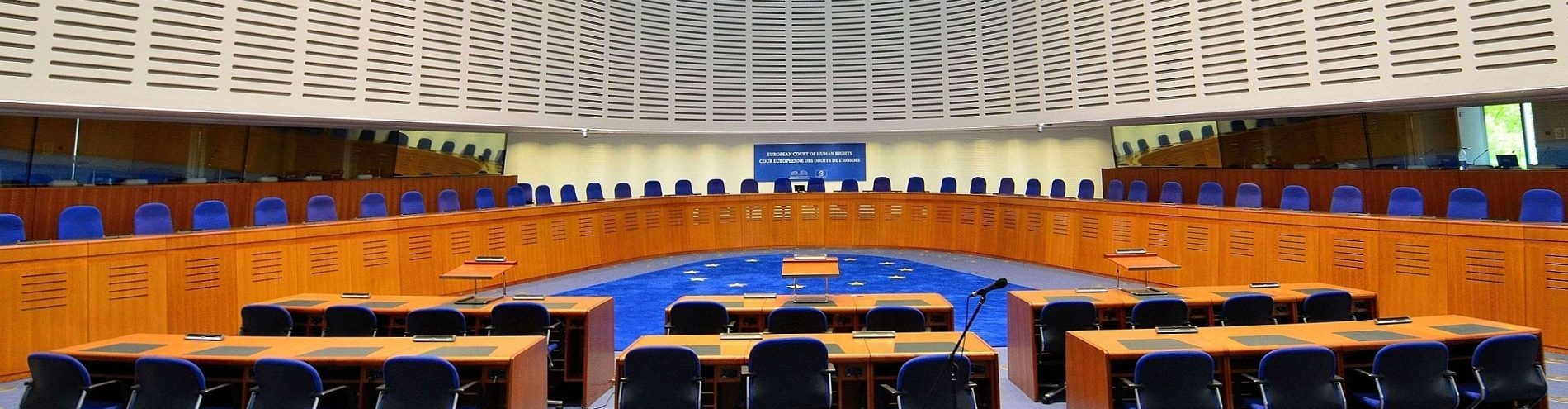
AG 505 zum Europäischen Gerichtshof für Menschenrechte: Sitzung vom 18. Dezember 2025

Liebe Studierende,

auf der Tagesordnung unserer kommenden Sitzung stehen folgende Themen:

  1. Todesstrafe und Todestrakt vor dem EGMR: der legendäre Fall Soering / Vereinigtes Königreich (zur Nachholung der ausgefallenen Sitzung vom 20.11.25);
  2. Kollektivausweisungen von Migranten an der Grenze zwischen Marokko und Spanien? Rs. N.D. und N.T. / Spanien

Die betreffenden Urteile sind diesem Beitrag als Anlage beigefügt.

Ich freue mich auf anregende Diskussionen am Donnerstag.

Prof. Dr. Johan Callewaert

AG 505 zum Europäischen Gerichtshof für Menschenrechte: Sitzung vom 27. November 2025

Liebe Studierende,

auf der Tagesordnung unserer kommenden Sitzung stehen folgende Themen:

  1. Beendigung lebenserhaltender Maßnahmen (Rs. Lambert u.a. / Frankreich)
  2. Abbau der Unabhängigkeit der Justiz in Polen (Rs. Dolinska-Ficek und Ozimek / Polen)

Die Urteile des EGMR in diesen Rechtssachen liegen diesem Post bei.

Ich freue mich auf anregende Diskussionen in unserer AG.

Prof. Dr. Johan Callewaert