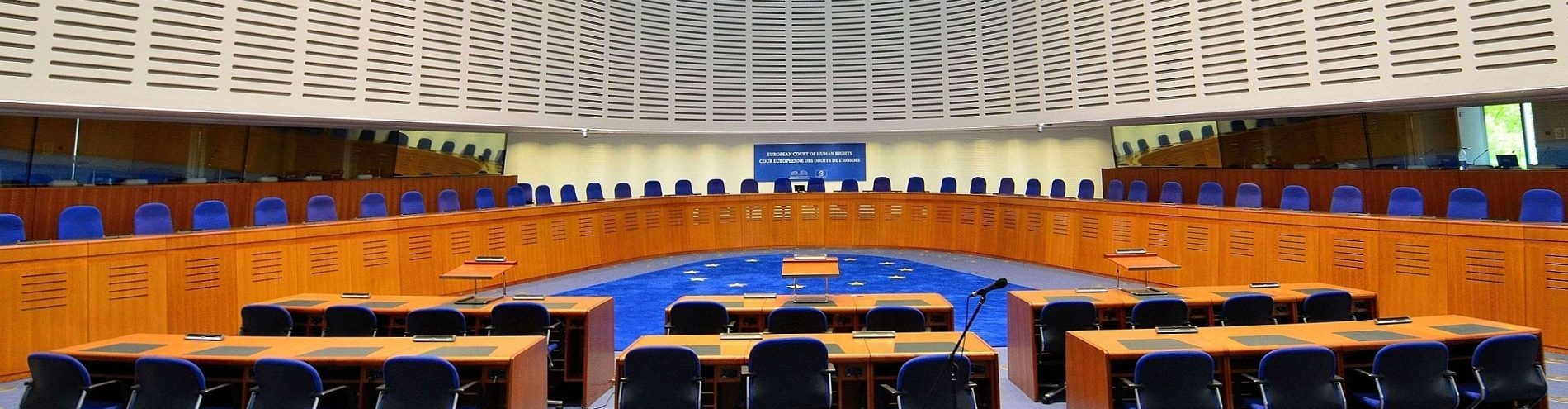
AG 505 zum Europäischen Gerichtshof für Menschenrechte: Sitzung vom 27. November 2025

Liebe Studierende,

auf der Tagesordnung unserer kommenden Sitzung stehen folgende Themen:

  1. Beendigung lebenserhaltender Maßnahmen (Rs. Lambert u.a. / Frankreich)
  2. Abbau der Unabhängigkeit der Justiz in Polen (Rs. Dolinska-Ficek und Ozimek / Polen)

Die Urteile des EGMR in diesen Rechtssachen liegen diesem Post bei.

Ich freue mich auf anregende Diskussionen in unserer AG.

Prof. Dr. Johan Callewaert

What a difference a composition makes… Comparing AW ‘T’ with Walesa v. Poland on the lack of judicial independence and the use of extraordinary appeals in Poland

AW ‘T’ (4.9.2025, C-225/22) is another ruling by the CJEU on the rule-of-law crisis in Poland and the consequences to be drawn of the fact that, because of serious flaws in the procedure for the appointment of its members, the Chamber of Extraordinary Review and Public Affairs (CERPA) of the Polish Supreme Court cannot be regarded as an independent and impartial court previously established by law (see, among others, Krajowa Rada Sądownictwa). This time, the issue was about the effects of a decision by the CERPA upholding an extraordinary appeal lodged by the Prosecutor General.

The facts of the case can be summarized as follows. In 2004, AW ‘T’ filed a lawsuit against other companies claiming infringement of industrial property rights and unfair competition related to crossword puzzle magazines. After years of litigation, the Cracow Court of Appeal issued a final judgment in 2006. However, in 2020, the Prosecutor General filed an extraordinary appeal against the 2006 judgment, arguing procedural violations. The CERPA upheld the appeal in 2021, overturned the 2006 judgment, and referred the case back to the Court of Appeal for re-examination. The Court of Appeal referred the matter to the CJEU, seeking clarification on whether EU law allowed it to disregard the CERPA’s decision because of the serious flaws in the procedure which had led to the appointment of its members, thus raising doubts about its independence.  

In essence, the CJEU ruled that the principle of the primacy of EU law requires national courts to disregard national rules or decisions that conflict with EU law, including those of constitutional courts. Consequently, decisions by judicial bodies which do not meet the EU law requirements of independence, impartiality, and lawful establishment must be regarded as null and void by lower courts. Thus, the Cracow Court of Appeal should assess, in light of the criteria listed by the CJEU, whether the CERPA meets these requirements. If not, it is prevented under EU law from carrying out the re-examination ordered by the CERPA.

Interestingly, in Wałęsa v. Poland (23.11.2023, 50849/21), the ECtHR also had to deal with an extraordinary appeal lodged by the Polish Prosecutor General before the CERPA. This time, the CERPA had reversed a Court of Appeal judgment in favour of the applicant in a defamation case and had dismissed the latter’s claim. The applicant is a former leader of the “Solidarity” (Solidarność) trade union, a former President of Poland (from 1990 to 1995) and laureate of the 1983 Nobel Peace Prize.

AW ‘T’ and Wałęsa v. Poland thus provide a good opportunity to compare the Luxembourg and Strasbourg approaches on the legal consequences of the CERPA not being an independent and impartial court, which is an essential issue in the context of the rule-of-law crisis in Poland, with implications for similar constellations in other European countries.

*          *           *

A first observation in this context is the consensus between the two European Courts on the fact that the CERPA lacks the necessary independence and impartiality for it to be considered a proper court for the purposes of the Convention and EU law.

In AW ‘T’, the CJEU recalled its ruling in Krajowa Rada Sądownictwa (C-718/21, 21.12.2023) in which it explicitly followed the conclusion reached by the ECtHR in Dolińska-Ficek and Ozimek v. Polandto the effect that because of the manner in which its members had been appointed, the CERPA could not have the status of an independent and impartial tribunal previously established by law, for the purposes of the second subparagraph of Article 19(1) TEU, read in the light of the second paragraph of Article 47 of the EU-Charter (§ 49).

In Dolińska-Ficek and Ozimek v. Poland, the ECtHR indeed concluded as follows:

The breaches of the domestic law that [the ECtHR] had established, arising from non-compliance with the rule of law, the principle of the separation of powers and the independence of the judiciary, inherently tarnished the impugned appointment procedure. A procedure for appointing judges disclosing undue influence of the legislative and executive powers on the appointment of judges was per se incompatible with Article 6 § 1 of the Convention and, as such, amounted to a fundamental irregularity adversely affecting the whole process and compromising the legitimacy of a court composed of the judges so appointed. In sum, the breaches in the procedure for the appointment of judges to the CERPA of the Supreme Court were found to have been of such gravity that they impaired the very essence of the applicants’ right to a ‘tribunal established by law.’” (§§ 348-350)

Consequently, according to the CJEU, the competent panel of the CERPA had not met the requirements of effective judicial protection, as prescribed by the above provisions. Its composition was “such as to give rise to reasonable doubts, in the minds of individuals, as to the imperviousness of those judges and the panel in which they sit to external factors, in particular the direct or indirect influence of the national legislature and executive and their neutrality with respect to the interests before them. Those factors were thus capable of leading to a lack of appearance of independence or impartiality on the part of those judges and that body likely to undermine the trust which justice in a democratic society governed by the rule of law must inspire in those individuals” (§ 50).

Indeed, the presence, in the judicial body concerned, of a single judge appointed in such circumstances is sufficient to deprive that body of its status as an independent and impartial tribunal previously established by law (§ 57).

The remarkable consequence drawn from this conclusion by the CJEU is that, having regard to the primacy of EU law, the Court of Appeal should disregard, as being null and void, the decision by the CERPA ordering the Court of Appeal to re-examine the case in which the same Court of Appeal had already handed down a final judgment, regardless of the fact that this decision had the force of res judicata.

Accordingly, there was no need for the CJEU to engage in an assessment of the extraordinary appeal as such, as the decision of the CERPA to uphold it was null and void and could be disregarded. That was already the end of the story for the CJEU.

*          *           *

Not so in Wałęsa v. Poland. The res judicata at stake here was not, as in AW ‘T’, the one attaching to the decision of the CERPA but the one attaching to the final judgment of the Court of Appeal which was set aside by the CERPA. Thus, the issue before the ECtHR was not only, as for the CJEU, the independence and impartiality of the CERPA, but whether there had been an abuse of the extraordinary appeal by the CERPA, making that appeal an ordinary appeal in disguise.

This difference has everything to do with the different position of the ECtHR and the different timing of its intervention in the judicial process, as pertinently observed by Advocate General Spielmann in paragraph 82 of his Opinion in AW ‘T’:

“The role of the Court of Justice when giving a preliminary ruling is to give national courts ex ante indications on how to apply EU law and not to determine ex post the existence of an infringement in a specific case, as is the case with the European Court of Human Rights. Thus, with regard to the requirements relating to an independent and impartial tribunal previously established by law, the Court has entrusted the national courts, as ordinary courts operating under EU law, with the task of monitoring compliance with those requirements and, where necessary, restoring the effectiveness of judicial protection in the Member States concerned.”

In other words, in AW ‘T’, the preliminary ruling by the CJEU disqualifying the CERPA prevented, at the level of the Cracow Court of Appeal, the extraordinary appeal from having any effect. By contrast, in Wałęsa v. Poland, the extraordinary appeal led to a judgment by the CERPA overturning the final judgment of the Court of Appeal and dismissing the applicant’s claims. The ECtHR was therefore called on to rule on the use and the effects of the extraordinary appeal in this case.

The ECtHR did not prohibit in the abstract any use of extraordinary appeals. Neither did it consider the composition of the CERPA as automatically entailing an abusive use of an extraordinary appeal. Rather, the flawed composition of the CERPA was only one aspect to be taken into account by the ECtHR, next to other criteria such as the public bodies authorised by law to lodge an extraordinary appeal, the grounds for lodging an extraordinary appeal, the time-limits for lodging an extraordinary appeal and the powers and characteristics of the adjudicating body (§§ 228-239).

In light of these criteria, the ECtHR found that the extraordinary appeal procedure as currently operating in Poland was incompatible with the fair trial standards and the principle of legal certainty under Article 6 § 1. This was because the circumstances of the case indicated an abuse of the extraordinary appeal by the State authority in pursuance of its own political opinions and motives. Accordingly, the ECtHR found no circumstances of a substantial and compelling nature that would justify the departure from the principle of res judicata in respect of the overturned judgment (§§ 254-255).

However, in contrast with the CJEU judgment in AW ‘T’, where the overturned final judgment was protected in the end, the judgment in Walesa v. Poland does not (yet) have the effect of restoring the overturned judgment.

It may nonetheless have a wider impact, since in view of the systemic nature of the violations found, the ECtHR decided to apply the pilot-judgment procedure (Rule 61 of the Rules of Court) as well as Article 46 of the Convention. Under the latter provision, the ECtHR indeed gave rather clear indications on the measures to be taken by the Polish government in order to remedy the situation on a larger scale, under the supervision of the Committee of Ministers of the Council of Europe (§§ 328-332).

This approach resulted from the fact that, in the ECtHR’s opinion, the violations found of Article 6 § 1 of the Convention originated in the interrelated systemic problems connected with the malfunctioning of domestic legislation and practice caused by several factors, including (a) a defective procedure for judicial appointments involving the National Council of the Judiciary, (b)  the resulting lack of independence on the part of the CERPA, (c)  the exclusive competence of the CERPA in matters involving a plea of lack of independence on the part of a judge or a court, (d)  the defects of the extraordinary-appeal procedure, and (e) the exclusive competence of the CERPA to deal with extraordinary appeals.

Interrestingly, the deficiencies thus identified to a large extent stem from the Polish laws which, in Commission v. Poland (Indépendance et vie privée des juges) (5.6.2023, C-204/21), the CJEU found in infringement proceedings to be in breach of EU law. One may therefore expect, as in the cases of Ilva and Cordella (see Two Courts, Two Paths: Comparing Europe’s Environmental Jurisprudence), some “synergies” between the European Commission and the Committee of Ministers of the Council of Europe in their efforts to bring the Polish judiciary in line with their common European standards.

Meanwhile, on 17 November 2025, the processing of currently about 1100 applications pending before the ECtHR concerning the “rule-of-law crisis” in Poland has been further adjourned until 23 November 2026, at the request of the Polish government, to give it more time to adopt general measures following the Wałęsa v. Poland pilot judgment (see the press release to that effect).

*          *           *

When asking what the bottom line of the above considerations is, the following considerations come to mind.

  1. Both European Courts are determined to fight populist agendas aiming at weakening the rule of law and judicial independence. They agree on the substance of the requirements which these values entail (on this, see also Populism on Trial: The European Courts’ Response to a Common Challenge).
  2. The AW ‘T’ ex ante approach seems like a quick fix, protecting the res judicata of judgments being challenged through extraordinary appeals. From an applicant’s perspective it represents a preventive and therefore higher protection standard, which is entirely compatible with the Convention (see Art. 53). It may however leave the national judges applying the AW ‘T’ doctrine and disregarding judgments of a higher court in a somewhat delicate, unprotected position in the Polish judiciary.
  3. By contrast, the Strasbourg ex post approach is slower but more comprehensive, thus benefiting a greater number of victims of the abuse of the extraordinary appeal. Indeed, 1100 applications concerning this systemic problem are currently pending before the ECtHR. However, this approach is also requiring a higher level of cooperation by the domestic authorities.
  4. Both approaches in the end reinforce each other and are therefore to be welcomed.

AG 505 zum Europäischen Gerichtshof für Menschenrechte: Sitzung vom 20. November 2025

Liebe Studierende,

auf der Tagesordnung unserer nächsten Sitzung stehen folgende Punkte:

  1. Debriefing über die mündliche Verhandlung vom 19. November 2025, vor der Großen Kammer des EGMR, in der Rs. Grande Oriente d’Italia / Italien;
  2. Todesstrafe und Todestrakt vor dem EGMR: der legendäre Fall Soering / Vereinigtes Königreich. Das Urteil liegt dieser Ankündigung bei. Das Handout der Referentin finden Sie auf OLAT.

Ich freue mich auf einen spannenden Austausch mit Ihnen.

Prof. Dr. Johan Callewaert

AG 505 zum Europäischen Gerichtshof für Menschenrechte: Sitzung vom 13. November 2025

Liebe Studierende,

auf der Tagesordnung unserer kommenden Sitzung stehen folgende Punkte:

  1. Allgemeine Einführung in die Rolle und die Funktionsweise des EGMR;
  2. Briefing über die mündliche Verhandlung, der wir am 19. November in Straßburg beiwohnen werden. Die Pressemitteilung zu dieser Verhandlung sowie das Kammerurteil in der betreffenden Rechtssache liegen bei.

Ich freue mich auf einen spannenden Austausch mit Ihnen.

Prof. Dr. Johan Callewaert

AG 505 zum Grundrechtsschutz durch den Europäischen Gerichtshof für Menschenrechte: erste Sitzung am 6. November 2025

Liebe Studierende,

im Hinblick auf die erste Sitzung der Arbeitsgemeinschaft zum Grundrechtsschutz durch den Europäischen Gerichtshof für Menschenrechte (Donnerstag 6.11.25 um 18 Uhr in HS 5), bei der Sie sich auch jeweils ein Urteil des EGMR zur Präsentation und Besprechung in der AG aussuchen sollten, finden Sie anbei die Themenliste, aus der Ihre Auswahl erfolgen soll.

Damit können Sie sich schon mit den in der AG anstehenden Themen etwas vertraut machen und vielleicht auch schon eine Vorauswahl treffen. Die einzelnen Themen werde ich in der AG auch noch näher erläutern.

Ich freue mich darauf, Sie am 6. November persönlich kennenzulernen.

Prof. Dr. Johan Callewaert

Populism on Trial: The European Courts’ Response to a Common Challenge

How do the two European Courts courts address the challenges posed by populism in today’s Europe? What strategies do they share, and where do they differ?

These were the central questions I explored in a presentation entitled Populism: A Common Challenge for the European Courts, delivered on 20 October at a conference organized by the Pompeu Fabra University of Barcelona on “Europe’s Constitutional Stress Test: Judicial Resilience in an Age of Populism” (see the programme below).

The presentation began from the premise that populist movements focus their attacks on both democratic values – such as the rule of law, human dignity, freedom of expression, the protection of minorities, and the prohibition of hate and violence – and democratic institutions, including national courts and parliaments.

Accordingly, the analysis compared the case law of the European Court of Human Rights and the Court of Justice of the European Union with respect to each of these “targets,” supported by numerous illustrative excerpts from relevant judgments.

The findings revealed that the two European Courts pursue similar strategies. When democratic values are challenged, their common approach is to reaffirm these values by emphasizing their essential role in preserving the democratic character of European societies. When national courts and parliaments come under attack, the Courts’ focus shifts to safeguarding their proper functioning as a means of fostering citizens’ trust in democratic institutions.

The main conclusions of the presentation can be summarized as follows:

  • The ECtHR addresses a somewhat broader range of issues drawn from the democratic acquis.
  • On matters of shared concern, there is substantial alignment between Strasbourg and Luxembourg, notwithstanding some differences in formulation (on these differences and their importance, see also The very essence or mere appearances?). Given divergences in other legal domains, this convergence is noteworthy and commendable.
  • Judicial independence is the area of greatest convergence between the two Courts, which is unsurprising, as it is also the area most directly targeted by populist attacks.
  • Three significant challenges remain: the execution of European judgments, the spread of fake news and disinformation, and the composition of the European Courts themselves.
  • Finally, even acting in concert, the European Courts cannot ultimately succeed in defending democracy without the sustained support of a democratic majority among citizens.

Full details of the analysis, along with case law references and relevant excerpts, can be found in the accompanying PowerPoint presentation.

In search of a missing holistic approach: judgment of the CJEU in Nuratau

In the case of Nuratau (5.6.2025, C-349/24), the CJEU ruled on the interpretation of Article 3 of the Qualification Directive (2011/95), which allows EU Member States to adopt more favourable standards for granting international protection, provided they are compatible with the Directive. ​ The case involved A.B., a third-country national in the Czech Republic, whose application for international protection was rejected three times by the Ministry of the Interior. ​ A.B. argued that his removal to his country of origin would violate his right to private life due to the severing of his ties with the Czech Republic. ​

The CJEU clarified that subsidiary protection under the Qualification Directive is intended to address risks of serious harm in the applicant’s country of origin, such as the death penalty, torture, or threats due to violence. ​ It does not cover risks related to the applicant’s private life in the Member State examining the application. ​ Therefore, national legislation granting subsidiary protection based on the severing of ties with the host Member State is not within the scope of the Directive and cannot be considered a “more favourable standard” under Article 3. ​ Thus, this provision does not allow national legislation to grant subsidiary protection based solely on the risk of breaching the applicant’s right to private life.

However, the CJEU noted that Member States are free to grant residence permits or protection on humanitarian grounds under their national laws for reasons unrelated to the applicant’s country of origin, as long as such protection is distinct from the refugee or subsidiary protection status under the Qualification Directive. ​ Additionally, the Court emphasized that any return decision or removal order made under the Return Directive (2008/115) must respect the fundamental rights of the individual, including the right to private life, as guaranteed by the EU Charter of Fundamental Rights. Consequently, ​a return decision or a removal order cannot be adopted if it infringes the right to respect for the private life of the third-country national concerned.

*              *              *

This judgment not only highlights the limits of EU law in safeguarding the right to private life within the framework of international protection, it also is a fine example of how the CJEU closes itself off to a holistic approach, even in cases where it would be most needed.

While the CJEU reaffirmed that Member States may adopt more favourable standards under Article 3 of the Qualification Directive, it ruled that such discretion cannot extend to granting subsidiary protection solely on the basis of a risk to private life arising from the severance of personal ties with the host Member State. At the same time, it left open the possibility for Member States to grant residence on humanitarian grounds under national law.

In this domestic context, the CJEU referred to the EU Charter. Mindful of Article 51(1) of that Charter, which limits the latter’s scope to that of EU law, the CJEU established the connection between the applicant’s circumstances and EU law through a possible application of the Return Directive, giving rise to a decision to return or remove the third-country national.  

At this juncture, two important aspects appear to have been overlooked by the CJEU. First, when national authorities, as suggested by the CJEU, rely on domestic law to determine whether a third-country national should be permitted to reside in the country, they are unlikely to base their assessment on the Return Directive, whose very purpose is to facilitate removal rather than residence. Secondly, Article 8 of the Convention remains applicable in any event, even where the Return Directive ultimately governs the case.

This is because under the Convention, domestic courts confronted with a claim that deportation would result in a serious interference with private or family life are required – regardless of whether EU law applies – to assess the claim in light of Article 8. The ECtHR has developed a rich and nuanced body of case law setting out the criteria for such assessments (see the Guide on Article 8 of the Convention, at §§ 328-330)).

Thus, seen from a broader human rights perspective, Nuratau indirectly highlights the importance of the Convention as a complementary, or indeed as the primary safeguard in a context like the present one. While the Convention does not confer any right to asylum or international protection (N.D. and N.T. v. Spain, § 188), its Article 8 does operate to preclude deportation where such deportation would entail a disproportionate interference with the individual’s private or family life.

This principle also finds resonance within EU law through Article 52(3) of the EU-Charter, which provides that rights in the EU-Charter corresponding to those in the Convention must be interpreted consistently with the latter. Thus, even in the context of the Return Directive, the substantive protection offered by Article 8 of the Convention ought to inform the interpretation and application of EU law.

That said, the Convention framework and the EU legal order do not coincide entirely. Article 8 of the Convention, while capable of preventing removal, does not generate the broader entitlements attached to EU subsidiary protection – such as a residence permit, access to employment, education, or social welfare. Where the Qualification Directive does not apply, these matters remain governed by national law.

The outcome is a fragmented landscape in which the level and nature of protection depend on whether the case falls within the scope of EU secondary legislation or instead under the residual guarantees of the Convention. One can only regret the complete silence of the CJEU on the relevance and impact of Article 8 of the Convention in this context.

*              *              *

Nuratau therefore illustrates, with particular clarity, the complex interaction between EU law, national humanitarian discretion, and the Convention system. It also exposes the CJEU’s reluctance to engage with the broader legal landscape: despite the Convention’s clear relevance in cases such as the present one, the CJEU refrains from acknowledging it as part of the interpretative framework. In doing so, it misses one more opportunity to promote a more integrated approach to fundamental rights protection in Europe – one that would provide clearer guidance to national courts faced with such hybrid cases.

This reluctance is all the more worrying given that there are examples to the contrary. One of them is Dereci and Others, which concerned an issue not too remote from the issue at stake in Nuratau: the right of residence of third country nationals who sought to join their European Union citizen family members. In this case, a Grand Chamber of the CJEU explicitly addressed the interplay between EU law and the Convention in the following way:

“In the present case, if the referring court considers, in the light of the circumstances of the disputes in the main proceedings, that the situation of the applicants in the main proceedings is covered by European Union law, it must examine whether the refusal of their right of residence undermines the right to respect for private and family life provided for in Article 7 of the Charter. On the other hand, if it takes the view that that situation is not covered by European Union law, it must undertake that examination in the light of Article 8(1) of the ECHR. All the Member States are, after all, parties to the ECHR which enshrines the right to respect for private and family life in Article 8.” (§§ 72-73)

In light of this statement, by disregarding the possibility of a more holistic approach and presenting only a limited, fragmented view of the fundamental rights landscape as it exists in practice, Nuratau represents a regrettable step back in the CJEU’s role in assisting domestic courts and citizens in navigating Europe’s complex and fragmented framework of fundamental rights.

Be that as it may, the key takeaway for domestic judges and prosecutors is that Article 8 of the Convention invariably applies to claims by third-country nationals who allege a risk of violation of their right to private or family life in the event of deportation, regardless of whether EU law is applicable.

Two Courts, Two Paths: Comparing Europe’s Environmental Jurisprudence

How do the European Court of Human Rights and the Court of Justice of the European Union go about protecting the environment? What common features do they share, and what sets them apart? Are their rulings and approaches in conflict, or do they complement each other?

These were the questions I addressed in a presentation given at the conference organised by the Academy of European Law (ERA) on Recent Judgments on Fundamental Rights and Environmental Protection (online, 23–24 September 2025).

The analysis focused on a concrete example: the severe air pollution caused by the Ilva steelworks in Taranto (Italy), the largest industrial steelworks in Europe. Since both European Courts recently dealt with this issue—Cordella and Others v. Italy (54414/13) before the ECtHR and Ilva and Others (C-626/22) before the CJEU—this case-law provided an excellent opportunity to compare the Strasbourg and Luxembourg approaches to environmental pollution.

The comparison shows that the approaches of the two European Courts differ considerably in terms of their legal basis, scope, methodology and impact. While the Strasbourg approach, based on fundamental rights, is more general and comprehensive, the Luxembourg approach, mainly based on secondary legislation, is more specific and detailed. However, these two approaches complement each other. Their mutually reinforcing effect even seems indispensable when addressing complex situations such as those arising from the Ilva case.

The details of the comparison can be found in the enclosed PowerPoint presentation.

On this topic, see also Environmental pollution caused by the Ilva steelworks

How safe is the “safe country of origin” concept? Judgment of the CJEU in Alace and Canpelli

In the case of Alace and Canpelli (joined cases C-758/24 and C-759/24, 1.8.2025), the CJEU ruled on the application of the concept of “safe country of origin” and its consequences.

In the CJEU’s press release, the facts of this case are summarized as follows.

The case concerns two Bangladeshi nationals who were rescued at sea by the Italian authorities and taken to a detention centre in Albania under the Italy-Albania Protocol, which establishes a detention and repatriation centre on Albanian territory, but subject to Italian jurisdiction. Their application for international protection was examined under the accelerated border procedure by the Italian authorities, which rejected it as unfounded, on the ground that their country of origin is considered ‘safe’.

Under the Procedures Directive (2013/32), Member States may accelerate the examination of applications for international protection and conduct it at the border where those applications are made by nationals of countries considered to offer adequate protection. In Italy, that designation of third countries as safe countries of origin has been effected, since October 2024, by a legislative act. Under that act, Bangladesh is considered in Italy to be such a ‘safe country of origin’.

The applicants challenged the rejection decision before the Rome District Court, which made a reference to the CJEU in order to clarify the application of the safe country of origin concept and the Member States’ obligations in terms of effective judicial review.

*              *              *

The findings of the CJEU in this case can be summarized as follows:

  • EU law allows Member States to designate third countries as safe countries of origin by legislation, but such designations must be open to effective judicial review, ensuring compliance with the material conditions in Annex I of the Directive.
  • The sources underlying such designations must be sufficiently accessible to applicants and courts to guarantee effective protection of rights; national courts may also rely on their own reliable information, provided both parties can comment on it.
  • Until Regulation 2024/1348 takes effect (expected 12 June 2026, unless advanced), Member States may not designate as safe any country that fails to meet the material conditions for certain categories of persons.

*              *              *

The main issue before the CJEU was about whether it makes any difference when the designation of a country as safe is the result of a legislative act. In essence, the CJEU’s response, based on an interpretation of Article 46 of the Procedures Directive, is that the legislative origin of this designation does not matter much: While there is no principled objection against such a designation being made through a legislative act, the effectiveness of the remedy nonetheless requires that the designation as safe country of origin, which has to comply with the criteria set out in Annex I to the Procedures Directive, must be open to judicial review in an individual case.

This in turn requires that the information on which the designation is based be made accessible both to the applicant and the competent judicial authority for adversarial comments. Since the designation as safe country is only a rebuttable presumption of adequate protection in the country of origin (§ 48), the reviewing court must carry out a full and ex nunc examination of both facts and points of law (§ 76). A question however arises as to the impact of the rebuttal of this presumption by a court in an individual case: is each reviewing court to have the power to rebut or not that presumption in an individual case? Might this give rise to a patchwork of approaches?

In any event, in light of the above requirements, an individual assessment which is open to judicial review is still required in cases which are decided on the basis of the safe country status. This would appear to significantly reduce the benefit to be expected from summary or accelerated procedures at the border or in transit zones.

*              *              *

The above approach is in line with the one followed by the ECtHR, as exemplified by the case of S.H. v. Malta (37241/21, 20.12.2022), which is a striking illustration of why an individual review may be called for in cases decided in light of the safe country status.

The case concerned a Bangladeshi journalist who fled his country after reporting on electoral irregularities in his country and claimed that he was therefore exposed to threats and attacks. ​ In Malta, he filed three successive applications for asylum which, according to the ECtHR, faced multiple significant procedural shortcomings, including:

  • A lack of legal assistance
  • A superficial credibility assessment
  • The failure to consider relevant evidence
  • A superficial and automatic judicial review, giving rise to stereotyped decisions given within 24 hours
  • Delayed and ineffective notifications
  • A lack of individualized risk assessment
  • The ineffectiveness of the Constitutional redress proceedings, due the absence of an automatic suspensive effect pending these proceedings

As a result, the ECtHR ruled that returning S.H. to Bangladesh without a fresh assessment of the risks he might face back in his country of origin would violate Articles 3 (prohibition of ill-treatment) and 13 of the Convention (right to an effective remedy).

What makes S.H. v. Malta particularly relevant in the present context is the fact that S.H.’s application was processed in Malta, an EU Member State, under an accelerated procedure, with the authorities relying all along on the designation of Bangladesh as a safe country of origin.

The case also very well illustrates the interplay between EU law and the Convention in these matters. It is characterized by the ECtHR coming last in ruling on the merits of the case and assessing the use made by national authorities of the safe country of origin concept. In S.H. v. Malta, the ECtHR ordered a fresh assessment of the risks involved in returning the applicant, pending which the national authorities were requested, by way of an interim measure (Rule 39 of the Rules of Court), to stay the execution of the impugned deportation.

As the ECtHR put it: “while the Court need not enter into the ministerial decision designating Bangladesh as a safe country, … a full individual assessment is nonetheless called for in certain circumstances, despite such designation.” (§ 91) In D.L. v. Austria (34999/16, 7.12.2017), the ECtHR was even more explicit when stating: “the Court must agree with the applicant that as concerns his individual case, it was irrelevant whether Kosovo was declared a ‘safe country of origin’ by law. Such a declaration does not relieve the extraditing State from conducting an individual risk assessment.” (§ 59)

*              *              *

Fortunately, as regards the assessment to be carried out by national courts relying on the safe country of origin concept, the requirements set out by the CJEU largely coincide with those of the ECtHR. Both European Courts indeed insist on the effectiveness which should characterize the review to which the application of the safe country of origin concept must be subject (S.H. v. Malta, § 78; Alace and Canpelli, §§ 65, 78, 80, 86), the concept of safe country of origin being only a rebuttable presumption of adequate protection in the country of origin (Alace and Canpelli, § 48). This notably requires the review to have an automatic suspensive effect (S.H. v. Malta, § 79; Art. 46(5) of the Procedures Directive).

However, while Article 46 of the Procedures Directive only states the right of applicants for international protection to an effective remedy, the CJEU, by reading this provision in the light of Article 47 of the EU-Charter, requires this remedy to be judicial in nature (§ 77). By contrast, under the Convention, such a remedy does not need to be judicial, but it should allow an independent, rigorous and prompt scrutiny (§ 79). For both European Courts, the reviewing authority should carry out a full and ex nunc examination of both facts and points of law (Art. 46(3) of the Procedures Directive).

Both European Courts also seem on the same line in considering that adequate information of the applicants and the reviewing authorities is key in ensuring the effectiveness of any review. While the ECtHR in S.H. v. Malta criticises the lack of a proper reasoning of the decisions rejecting S.H.’s applications for asylum (§§ 86-87), the CJEU explains the link between proper information and effectiveness of the review as follows:

“In the light of the case-law cited in paragraph 78 above, it must, therefore, be held that, in order for the judicial protection to be effective, both the applicant concerned and the court or tribunal seised must be able to have not only knowledge of the grounds for such a rejection, but also access to the sources of information on the basis of which the third country in question was designated as a safe country of origin.” (§ 80)

In this context, the CJEU holds that the reviewing court must raise, on the basis of the information in the file and the information brought to its attention during the proceedings before it, a possible failure to have regard to the material conditions for the designation of a third country as a safe country of origin, set out in Annex I to that directive. That court may also do so by taking into account other information which it may itself have gathered, whether from public sources or from sources which it has requested one of the parties to the proceedings before it to produce (§§ 85-86).

The use of “may” suggests that gathering relevant information of its own motion is only an option for the reviewing court. However, this may not be enough under the Convention. In S.H. v. Malta the ECtHR indeed reiterated that in relation to asylum claims based on an individual risk, it must be for the person seeking asylum to rely on and to substantiate such a risk. However, if a Contracting State is made aware of facts relating to a specific individual that could expose him to a risk of ill-treatment in breach of the said provisions upon returning to the country in question, the obligations incumbent on the States Parties under Articles 2 and 3 of the Convention entail that the authorities carry out an assessment of that risk of their own motion (§ 88, with reference to F.G. v. Sweden).

*              *              *

What is now the bottom line of this comparison of the Luxembourg and Strasbourg jurisprudences?

As always, the courts of EU Member States should apply EU law without breaching the Convention, since compliance with the latter when applying EU law can be challenged by way of an application before the ECtHR. The required modus operandi can therefore be summarized as follows:

  • The application of the safe country of origin concept does not relieve the extraditing State from conducting an individual risk assessment (common requirement);
  • A third country which fails to meet the material conditions in Annex I of the Directive for certain categories of persons cannot be considered safe (Luxembourg requirement);
  • This risk assessment must be open to rigorous scrutiny (Strasbourg requirement) within the framework of an effective judicial remedy (Luxembourg requirement), which requires a full and ex nunc examination of both facts and points of law (common requirement);
  • This judicial remedy must have an automatic suspensive effect (common requirement);
  • The reviewing courts and the applicants must be provided with adequate information of the grounds for a rejection of an application for international protection based on the safe country of origin concept (common requirement), and with access to the sources of information on the basis of which a third country in question was designated as a safe country of origin (Luxembourg requirement);
  • The obligations incumbent on the States Parties under Articles 2 and 3 of the Convention entail that the authorities carry out an assessment of that risk of their own motion (Strasbourg requirement).

This post is titled: “How safe is the safe country or origin concept?” In light of cases such as S.H. v. Malta, it seems that the answer must be: less safe than one might expect.

Different but compatible approaches to international sports arbitration: comparing Semenya (ECtHR) with Royal Football Club Seraing (CJEU)

Within a single month, both the European Court of Human Rights (ECtHR) and the Court of Justice of the European Union (CJEU) – acting through their Grand Chambers – issued judgments regarding dispute resolution in professional sports. These cases focused on the roles played by the Court of Arbitration for Sport (CAS) and the Swiss Federal Supreme Court (FSC).

In Semenya v. Switzerland (10934/21, 10.7.2025), the ECtHR adjudicated the case of an international-level South-African athlete who complained about a set of regulations issued by World Athletics (“the DSD Regulations”) requiring her to decrease her natural testosterone level in order to be allowed to take part in international competitions in the female category.

Royal Football Club Seraing (C-600/23, 1.8.2025), decided by the CJEU, concerned a Belgian football club which had concluded financing agreements with a Maltese company. The Fédération internationale de football association (FIFA) found these agreements to be in breach of the prohibition on third parties holding players’ economic rights and therefore imposed several sanctions on the club.

Pursuant to the regulations applicable to international sports competitions, which establish the CAS as having mandatory and exclusive jurisdiction in respect of disputes arising in this area, both cases were first brought before the CAS, the awards of which were subsequently challenged, by way of a civil-law appeal, before the Swiss Federal Supreme Court, which dismissed both appeals. In both cases, the review by the FSC was limited to assessing whether the CAS award was “incompatible with public policy”, a concept which under Swiss law is even more restrictive than that of arbitrariness (Semenya, § 226).

In Semenya, the ECtHR found inter alia that the FSC had breached Article 6 § 1 of the Convention (right to a fair trial). Because of its proximity with RFC Seraing, this finding will be the focus of the following developments.

In RFC Seraing, the CJEU ruled, in substance, that in circumstances as in the case at hand, where the dispute is linked to the pursuit of a sport as an economic activity, no authority of res judicata and no probative value could be conferred within the territory of a Member State on an award made by the CAS.

*              *              *

With the two European Courts pronouncing upon the same international arbitration system – one that plays an important role in the world of international sports – the question arises as to what these rulings have in common, and how domestic courts should handle them.

A first common feature of these two rulings is the understanding shown for the particularities of litigation in international sports, which may justify certain restrictions on the common procedural rights (Semenya, §§ 195-199; RFC Seraing, § 84). However, there are limits to these restrictions, not least because of the structural imbalance which often exists between sportspersons and the bodies which govern their respective sports, and because these sportspersons have no choice other than submitting to the compulsory arbitration of the CAS. It is on the definition of these limits that the two European Courts follow different approaches. While the Luxembourg approach is more formal, the Strasbourg approach is more substantial.

The CJEU draws the line where matters relating to EU public policy are involved. These matters include the competition rules and the freedoms of movement (§§ 88-89). I such cases, the second sub-paragraph of Article 19(1) TEU, read in conjunction with Article 267 TFEU and Article 47 of the EU-Charter, requires full respect of the right to an effective judicial review. In concrete terms, this means that any domestic court of a Member State called on to give effect to an arbitration award such as the one by the CAS in the present case, must review that award for consistency with EU public policy and have the possibility to refer questions for a preliminary ruling by the CJEU, pursuant to Article 267 TFEU.

By contrast, the judgment of the ECtHR, which is directly reviewing the judgment of the FSC, follows a more substantial approach. Considering the case under Article 6 § 1 of the Convention, the ECtHR first notes the nature and importance of the “civil rights” invoked by the applicant, which are in fact fundamental rights, notably the rights to privacy, bodily integrity and dignity (§§ 215, 217).

This fact, in addition to the compulsory but private nature of the arbitration at stake, along with the restrictions it imposed on the rights being invoked, lead the ECtHR to hold that Article 6 § 1 required the FSC to carry out a “particularly rigorous examination” (§ 216) and an in-depth review (§ 238) of the civil-law appeal lodged with it by the applicant. Since the FSC failed to do so in respect of some key arguments of the applicant, even though the CAS itself had expressed serious concerns as regards some of the applicable DSD Regulations, the ECtHR concluded that before the SFC Ms Semenya had not benefitted from the safeguards provided by Article 6 § 1 (§ 238).

*              *              *

What should be retained from this comparison?

The Luxembourg approach is limited in scope, as it applies only when a) EU law applies, b) the dispute is linked to the pursuit of a sport as economic activity, and c) matters relating to EU public policy are at stake. But when that is so, it requires full respect of the right to an effective judicial review, regardless of the concrete issues. To this extent, the Luxembourg approach is more formal but at the same time more comprehensive and more conducive to legal certainty.

By contrast, the Strasbourg approach is not limited in scope and more substantial, as it takes the importance and weight of the issues at stake before the CAS and the FSC as criterion and justification of the requisite intensity of the FSC’s scrutiny. To this extent, it is more facts-based, more selective and less conducive to legal certainty. The focus is on the essential issues in each case, which may vary in light of the concrete circumstances.

What does that mean for domestic judges? The good news is that while different, these two approaches seem compatible with each other. This is because, when applicable, the Luxembourg approach requiring full respect of the right to an effective judicial review would appear to represent a higher standard than the Strasbourg “particularly rigorous examination”, the scope and intensity of which might moreover vary from case to case. Yet, it is well-known that the Strasbourg standard is only a minimum which may be raised (Art. 53 of the Convention).

The bad news, on the other hand, is for the FSC who is being told by RFC Seraing that however compliant with Article 6 § 1 of the Convention its review of CAS awards might be in the future, it cannot legally replace within the territory of the European Union a review by a court of a Member State authorised to make a reference to the CJEU for a preliminary ruling.