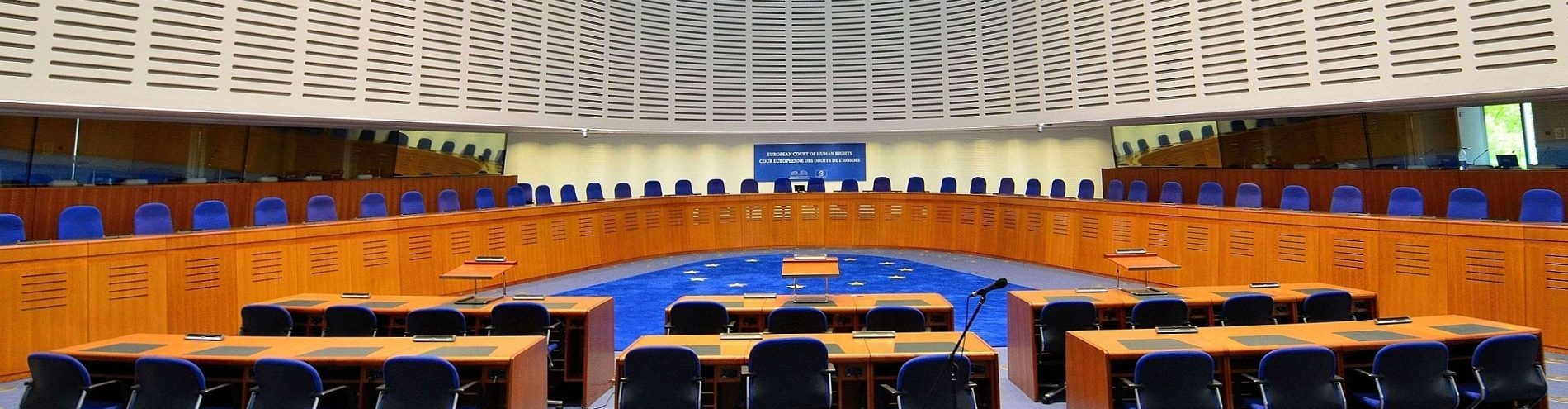
Over the past seven years, more than 100 posts comparing the case-law of the European Court of Human Rights and the Court of Justice of the European Union have been published on this blog. To facilitate their consultation and help draw broader conclusions about the interplay between the Convention and EU law, the document below brings these posts together and organises them into the following thematic areas:
• Scope of the Convention and EU Law
• Rule of law and judicial independence
• Criminal procedure
• Judicial cooperation and mutual recognition
• Asylum, migration and international protection
• Privacy, data protection and personal identity
• Fundamental rights and equality
• Family, children and personal status
• Human dignity, living conditions and detention
• Environment, society and emerging challenges
This classification, which will be regularly updated, provides a broad overview of major developments which have shaped the relationship between these two European sources of law over the past seven years in each of these areas.
One of the main lessons emerging from this overview is that the interaction between Strasbourg and Luxembourg has not been uniform. The picture is nuanced and contrasted, marked by both convergences and divergences (for a descrition of the latter, see Trends 2021-26).
In this respect, the reality of the case-law developments does not always correspond to the frequently expressed assumption that the relationship between the Convention and EU law is characterised solely by harmony. The approaches taken by the two European courts sometimes reinforce one another and sometimes point in different directions, but they are rarely without mutual implications.
Against this background, one of the key challenges remains preventing the fragmentation of fundamental rights protection in Europe. Meeting that challenge requires a holistic approach: one that is attentive to significant differences where they exist, while ensuring that such differences do not weaken the overall effectiveness and coherence of European fundamental rights protection.
This thematic classification aims to assist judges, practitioners, researchers and students in navigating this rich and evolving body of case law.
It also features on top of recent case-law.